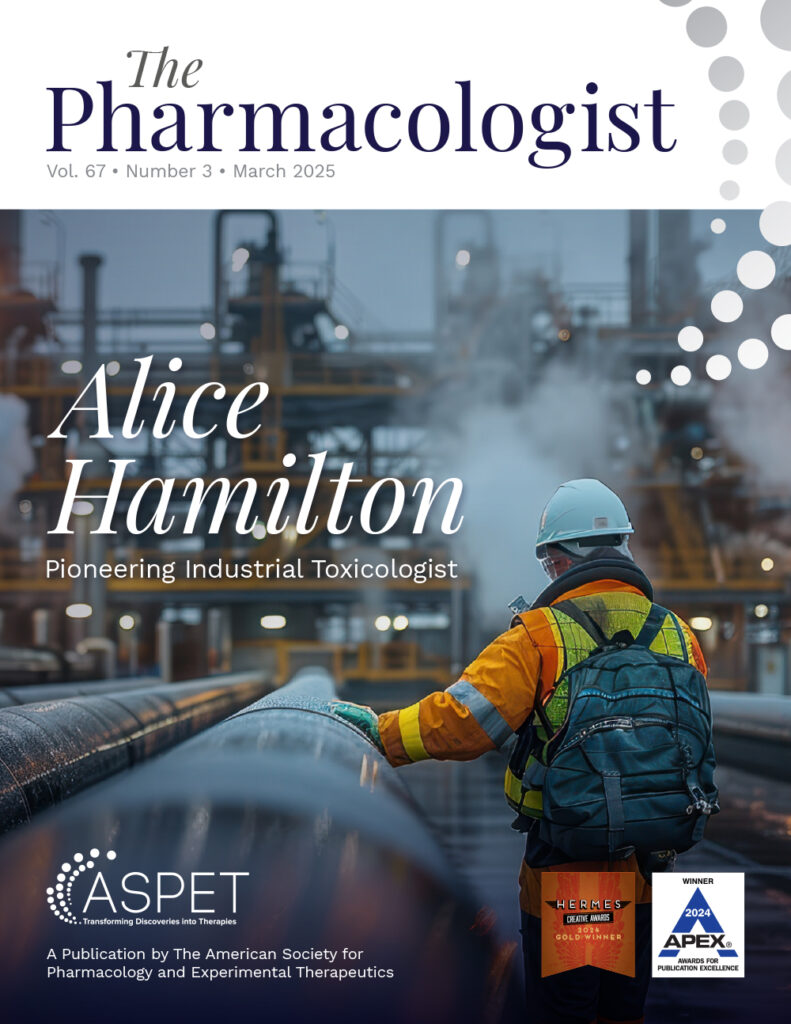


Since its founding in 1636, Harvard University had remained an all-male institution. Then, in 1919, Alice Hamilton was appointed to the Harvard faculty. She did not seek the post. Rather, she was actively and enthusiastically recruited by leaders in the medical school. The 50-year-old physician had amassed expertise and an international reputation unmatched by anyone else. She was simply the best person for the job.


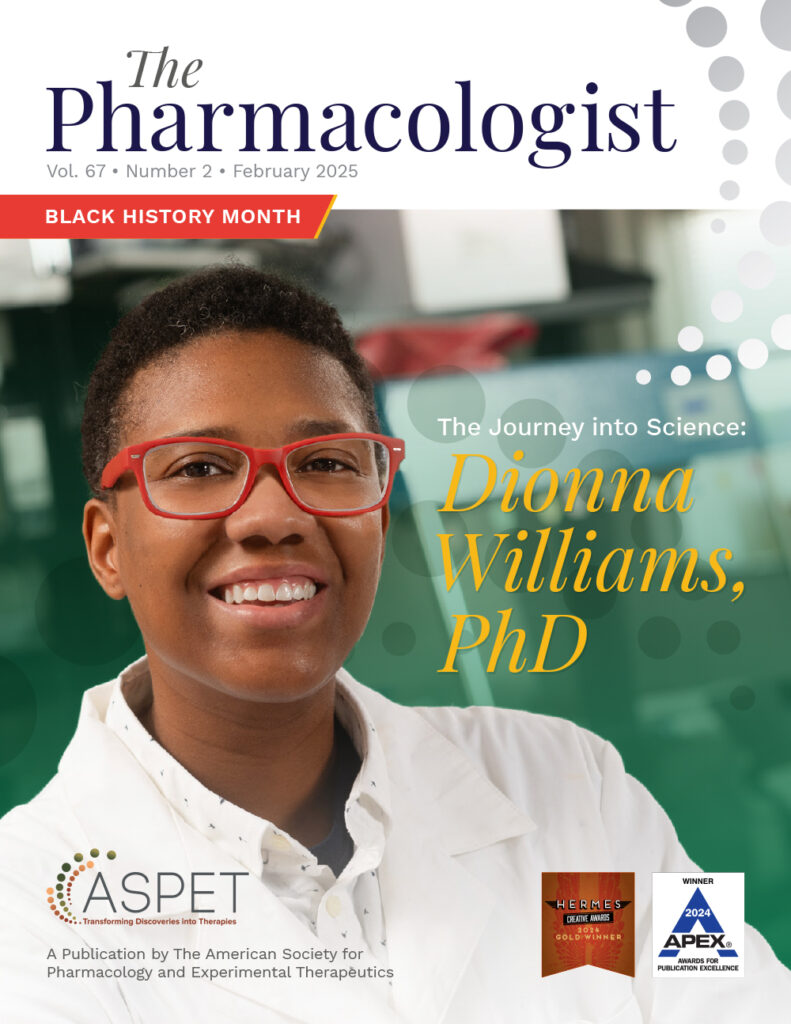
In honor of Black History Month, The Pharmacologist is highlighting the journey of Dionna Williams, PhD, Associate Professor at Emory University. Dr. Williams was one of two professors at Emory to recently receive the Presidential Early Career Award, the U.S. government’s highest honor for early-career scientists. She joined ASPET in 2022 and is a member of the Division for Drug Metabolism and Disposition.

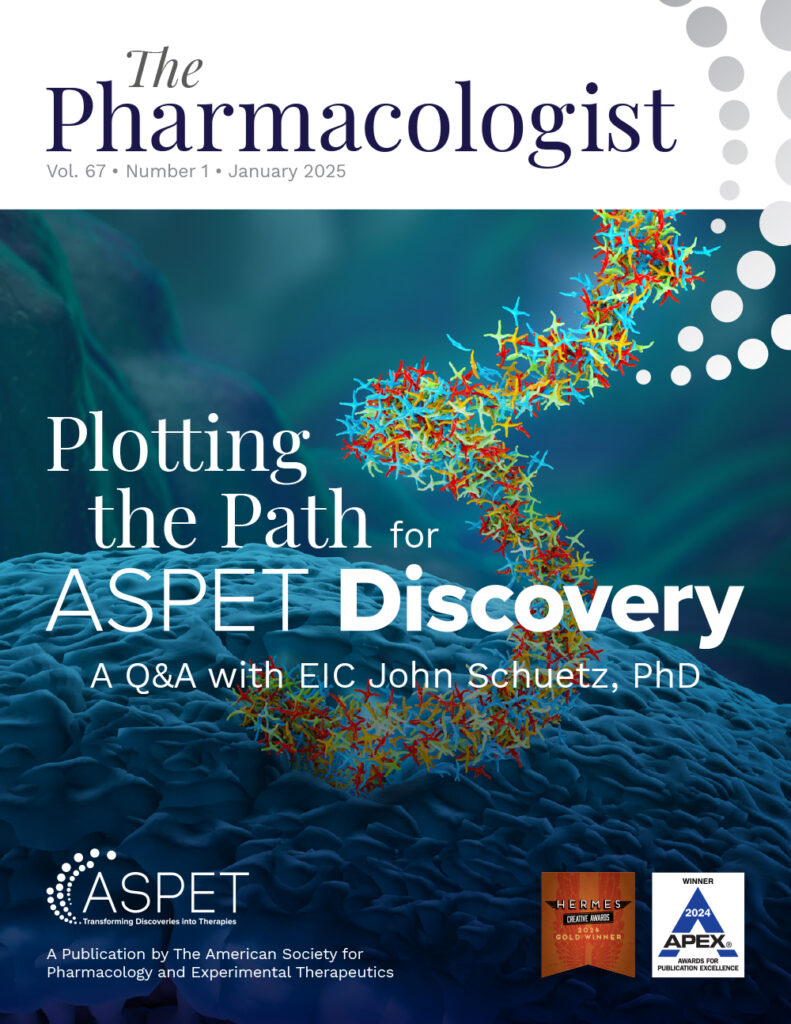
John D. Schuetz, PhD, is the inaugural Editor-in-Chief of ASPET Discovery, the newest Gold Open Access journal of the American Society for Pharmacology and Experimental Therapeutics. In partnership with Elsevier Publishing Company, ASPET Discovery, a peer-reviewed Open Access journal, will publish bi-monthly and include a range of article types including original research articles and minireviews that address all areas of pharmacology and experimental therapeutics. Dr. Schuetz will serve a three-year term that can be renewed for one additional three-year term.


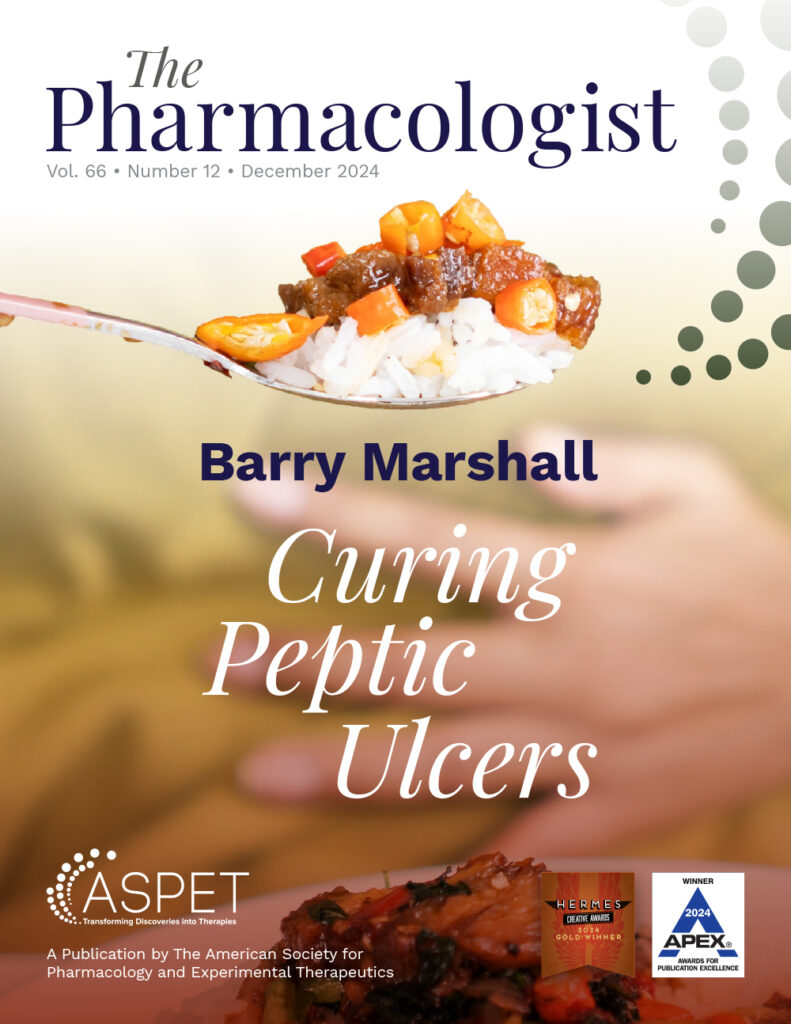
For a long time, my grandfather suffered from indigestion. In his day, gastritis (i.e., inflammation of the stomach lining) was thought to be due to excessive acid secretion. And damage from stomach acid could cause peptic ulcers.


By a show of hands, how many of you reading this article use a mobile app to manage your health? The term digital health has gradually become part of our lives, maybe more than you realize. It allows us to schedule appointments, view our medical records and test results, consult with our healthcare professionals, control our exercise routines, closely monitor health conditions, pay our medical bills, and so much more. Many of these tasks are accessible via mobile apps on smartphones and smart watches; but what exactly is digital health and how does this emerging model for delivering health care intersect with traditional forms of administering therapies to patients?


The late Dr. V. Craig Jordan, CMG, OBE, DSc, PhD, FMedSci, FBPhS, FASPET, was an ASPET member for 44 years. He passed away on June 9 at the age of 76. Considered the “Father of Tamoxifen,” Dr. Jordan was a science researcher and professor at The University of Texas MD Anderson Cancer Center. He was an American and British pharmacologist who is credited with discovering the first targeted therapy in cancer to treat breast cancer and osteoporosis. His work uncovered that tamoxifen and other compounds that selectively target estrogen receptors could both treat and prevent breast cancer. Recognized for his work in breast cancer research, he led a Tamoxifen Team that specialized in drugs for breast cancer treatment and prevention.


Lila Ash had long suffered from depression, and no treatment seemed to help. The few times she felt better, she had taken psychedelic drugs with friends. And yet, when her psychiatrist prescribed ketamine, she hesitated. She considered it a party drug, not a serious medicine. Eventually, though, she reached the point where she was willing to try it.


A mentorship program can be a life-long personal and professional benefit. Whether formal or informal, mentoring can offer people an opportunity to learn from one another through a transfer of skill and knowledge.


A Recap of the ASPET 2024 Annual Meeting. Thank You for Making ASPET 2024 a Success!


On the bulletin board someone had posted a crude sketch of an addict injecting himself, along with the caption, “When will it ever end? Never?” Someone else crossed out the “Never” and wrote, “When you dig yourself”.