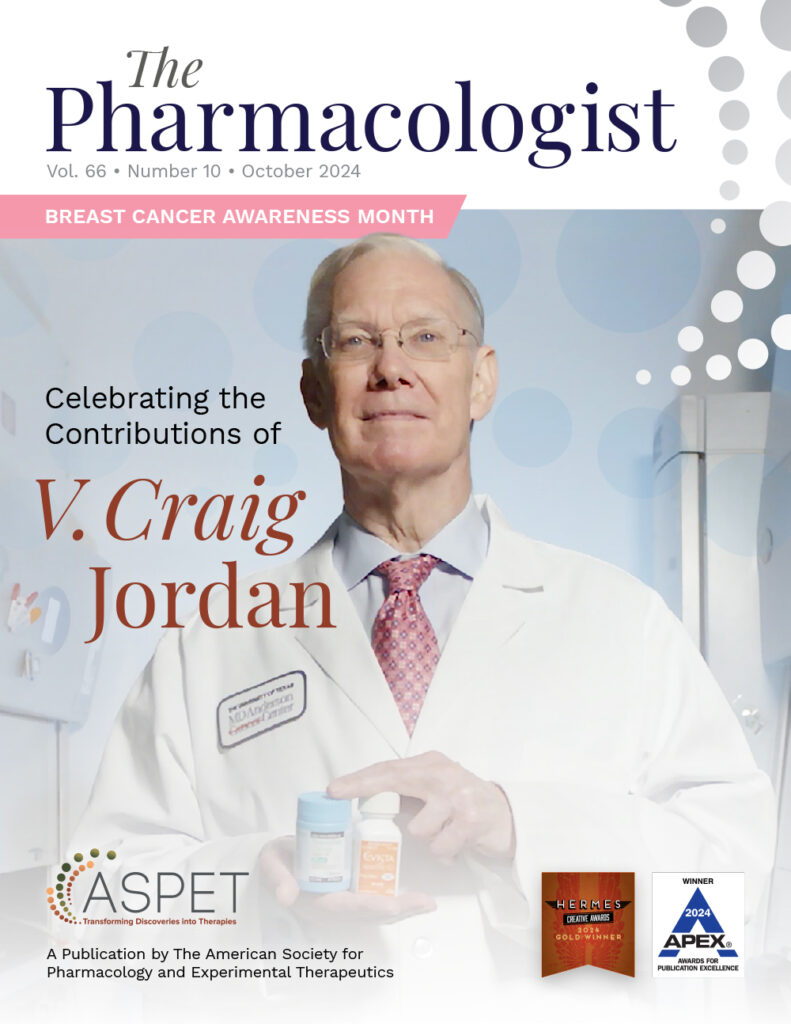


The late Dr. V. Craig Jordan, CMG, OBE, DSc, PhD, FMedSci, FBPhS, FASPET, was an ASPET member for 44 years. He passed away on June 9 at the age of 76. Considered the “Father of Tamoxifen,” Dr. Jordan was a science researcher and professor at The University of Texas MD Anderson Cancer Center. He was an American and British pharmacologist who is credited with discovering the first targeted therapy in cancer to treat breast cancer and osteoporosis. His work uncovered that tamoxifen and other compounds that selectively target estrogen receptors could both treat and prevent breast cancer. Recognized for his work in breast cancer research, he led a Tamoxifen Team that specialized in drugs for breast cancer treatment and prevention.




When I talk with ASPET members, I like to ask them about how they first got involved with the Society. Time and time again, the story I hear involves our divisions. For many members, the ASPET Divisions are how members meet future colleagues and make meaningful connections. Both anecdotally and in surveys, it’s clear that many of our members first realize that ASPET is their professional home through their involvement with one of our divisions.


A Conversation with ASPET’s President-Elect Randy Hall, PhD
Updates from some of our outstanding ASPET members.
Honoring ASPET members who have passed.
This month The Pharmacologist features two new policy briefs written by participants of the 2024 ASPET Washington Fellows program. These topics present compelling arguments for policy improvements on an issue of personal importance to each Fellow. The policy briefs below discuss the importance of understanding polysubstance use and accessible treatments for opioid use disorder in El Paso, Texas.
A showcase of early-career scientists—what drives them and why pharmacology is important to them.
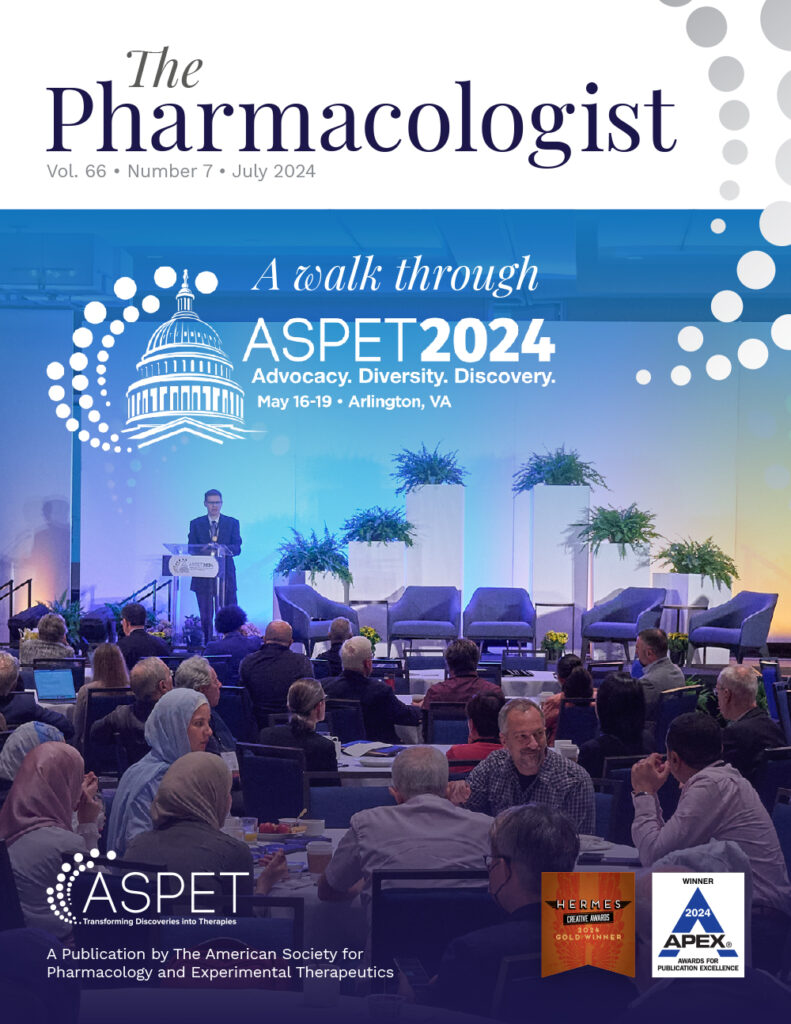
Dr. Xinxin Ding, Editor-in-Chief of Drug Metabolism and Disposition, recently spoke at The 25th International Symposium on Microsomes and Drug Oxidations about publishing with ASPET’s journals. Dr. Ding discussed the latest journals developments, including the new opportunities with the Society’s partnership with Elsevier. ASPET currently publishes four journals—The Journal of Pharmacology and Experimental Therapeutics, Drug Metabolism and Disposition, Molecular Pharmacology and Pharmacological Reviews. In collaboration with the British Pharmacological Society and Wiley, ASPET publishes Pharmacology Research & Perspectives.


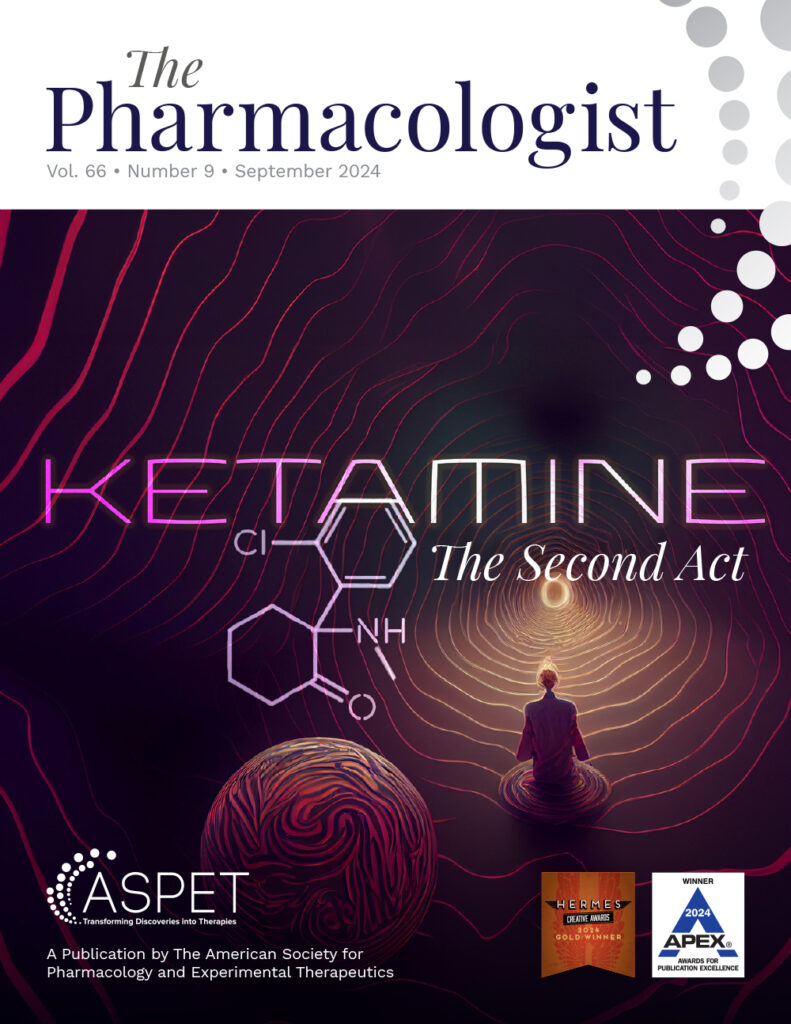
Lila Ash had long suffered from depression, and no treatment seemed to help. The few times she felt better, she had taken psychedelic drugs with friends. And yet, when her psychiatrist prescribed ketamine, she hesitated. She considered it a party drug, not a serious medicine. Eventually, though, she reached the point where she was willing to try it.