Finding a Home in Pharmacology: The Evolution of a Career
By Joan Heller Brown, PhD
Early Days
 We all likely recollect, when musing about our life’s trajectory, certain curious aspects of our childhood behavior. For me such a recollection was triggered by finding compositions, stashed in my mother’s closet, from my K–12 school days in Beachwood, Ohio. One paper was entitled “Witchcraft” and another “Mental Illness in America.” Perhaps these early interests presaged my choice of the newly developed “Neurobiology and Behavior” major which I selected in my first year of college at Cornell University. One of my most inspiring courses was given by the psychologist Urie Brofenbrenner, and revealed that scientific research could be applied to explain things like why diseases developed in specific parts of the world, or why babies don’t crawl off a platform. Science, I realized, might well explain the curious aspects of behavior that had intrigued me.
In my senior year I found a path to doing laboratory research with a professor named Frank Rosenblatt. As a total novice, I was tasked with making solutions and learned, to my mortification, that no course had ever taught me what a “molar solution” was. I struggled through, but stuck with it because the lab’s research really piqued my interest. They were doing experiments to understand the biochemical basis of learning and memory. More specifically, they were using “memory transfer” experiments, in which they trained mice, ground up their brains, and fed them to naïve mice. They hypothesized that memory of a learned task (turning right or left in a maze for a reward) could be transferred to recipient mice. The most instructive moment came when, while attending their lab meeting, I learned that scientists generate new hypotheses based on observation. In this case, it was a particularly surprising observation: mice receiving the brain extract from donor mice that had been trained to turn left, actually turned right at a higher-than-expected frequency!
It seemed to me that this disproved the hypothesis but, unfazed, one of the lab members suggested an explanation, i.e., that the chemical signal to turn left was fully saturated in the brain of the donor, leading to a propensity to turn right, rather than make the normal random choice, in the recipient. I was thrilled by the notion that one could generate findings and interpret them to fit the data, and grew hooked on the idea of doing hypothesis-driven (or hypothesis-generating) research.
Falling Into Pharmacology
As my senior year was coming to an end it became evident that I had no idea how to advance my education through a graduate training program.
I wanted a biological focus on the brain, and neither the GRE exam in Psychology nor the offerings in Physiological Psychology graduate programs fit my interests. At the time, neuroscience graduate programs simply didn’t exist. A fellow student I met in the midst of my dilemma told me about research-focused graduate programs in certain medical schools; in particular, at Albert Einstein College of Medicine (AECOM). There I found a graduate program in Pharmacology, with several faculty members studying drug and neurohormone action on the brain. While I knew nothing about the discipline of Pharmacology, I realized that the actions of drugs could provide a window into understanding the molecular mechanisms underlying the behavioral systems they affected. I applied to the Department of Pharmacology at AECOM, was accepted, and matriculated into what turned out to be a loosely defined program with only 2 other students in my class, no graduate courses, and no research rotations.
On the other hand, while the curriculum given to us was largely designed for the medical students, it included advanced courses and labs in biochemistry, physiology, neuroanatomy and pharmacology… all of which I loved. The textbook for the Pharmacology course was Goodman and Gilman’s Pharmacological Basis of Therapeutics; while initially unknown to me, the chair of the Pharmacology Department was the editor of this leading scholarly work. Alfred Gilman Sr. was, additionally, a former President of ASPET, and the faculty teaching the Pharmacology course were all authors of various chapters in the book. These professors, as well as those in Biochemistry and Neuroanatomy, were superb. There was also an unusually large number of women faculty at AECOM, and I barely recognized how unique this was because they seemed to be seamlessly integrated into the mix.
Research Findings
Many of the Pharmacology faculty who had interested me initially moved to other institutions during my first year, so finding a lab for my thesis research was a challenge. I was directed to Maynard Makman, an MD/PhD who trained at Case Western Reserve with the early group who discovered the role of cyclic AMP. While he had never trained a graduate student, his lack of mentoring experience was compensated by his total engagement and excitement over my research. It also turned out that Ora Rosen, one of the extraordinary women faculty members at AECOM, gave a graduate-level course focused on various aspects of what we now think of as “cell signaling,” the only course I was offered that was intended for graduate students, and one in which we read scientific papers!
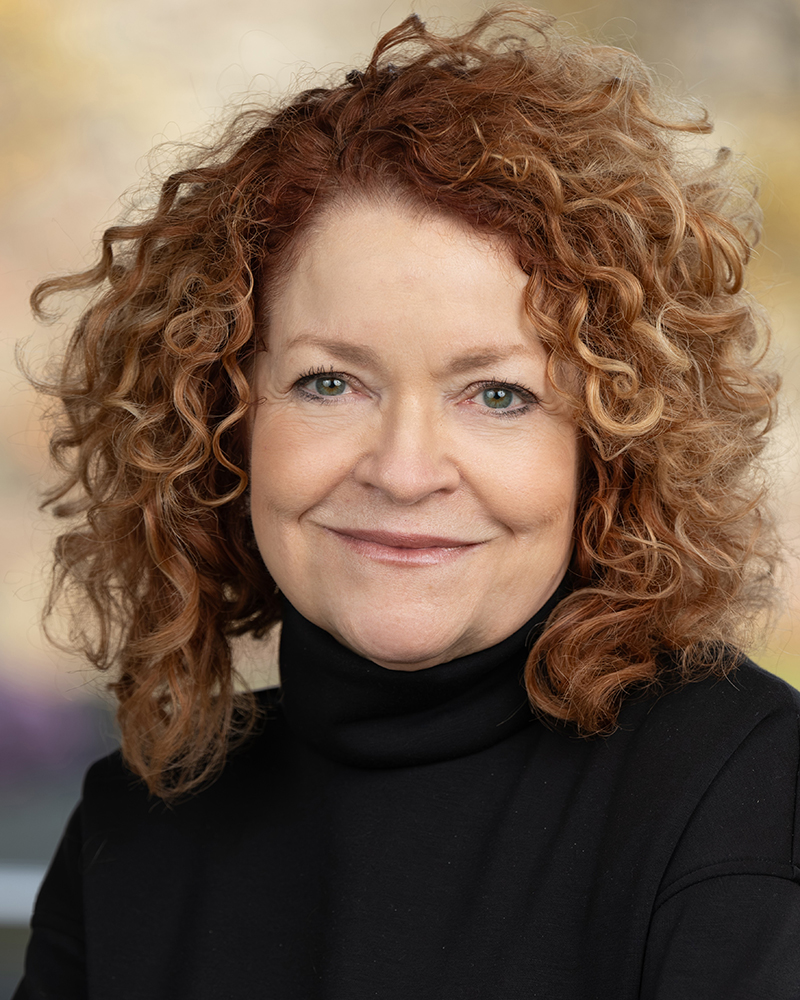 My interest in science started with my father, who was a surgeon. I made rounds with him when I was eight and saw my first surgery at nine. Obviously, this was before HIPAA.
But it wasn’t until I went to college at Washington University that I saw how far science reached. I had my first opportunity to conduct research under Dr. Al Holzer in the Department of Chemistry, an incredible but demanding mentor. Under his guidance, and because of the work we were doing, I decided that I wanted to go into research full-time but was unsure of which specialty. This was before there were umbrella programs, like PIBS at Michigan, and it was luck that I saw an advertisement on a bulletin board about pharmacology at Vanderbilt University. Pharmacology, I learned, was translational before translational was even a word. It was the synthesis of all the basic sciences to make something happen in medicine. I thought that was a fantastic approach and decided to study at Vanderbilt.
While I was a student at Vanderbilt, Dr. Bill Catterall, then the newly appointed chair of Pharmacology at the University of Washington, came to give a guest lecture in our receptors course. Bill’s lab was celebrated for its work with ion channels. I found his presentation fascinating, and applied to work in his lab as a postdoc.
Because we didn’t yet have a deep understanding of ion channel molecular biology, the work was far more complex than either of us had realized. My project focused on cloning sodium channel beta subunits from protein sequence, but this was before the Human Genome Project, and the work took years. Once, it was so disheartening that I went into Bill’s office and announced, “You do it. I quit!” Fortunately for me, he didn’t take that seriously.
I started applying for faculty jobs after I cloned SCN1B and SCN2B. Because there were three of us from Bill’s lab (all postdocs) applying for faculty positions at the same time, Bill’s thought was that we needed to divide and conquer so that we weren’t competing for the same job. For me, he recommended an advertised position in the Department of Pharmacology at the University of Michigan.
I was six months pregnant when I interviewed at Michigan, and pregnancy turned out to be the perfect litmus test. Some places where I interviewed essentially told me, “You can be a mother, or you can have a brain. One or the other.” At Ann Arbor, on the other hand, they couldn’t have been kinder or more accommodating. It was there that I learned “The Michigan Way,” which is salt-of-the-earth people doing state-of-the-art work, a fundamental trait that is still there today. Much of my success during my thirty years at the University of Michigan has been because of that culture, and it’s one I’ve tried to extend to others—to pull others up instead of closing the door behind me.
When I came to Michigan, I was invited to join a group of senior women faculty that included giants in their field, e.g. Miriam H. Meisler, PhD, and Sally A. Camper, PhD. They took new women faculty under their wings by offering informal monthly mentoring meetings, which gave us the opportunity to learn from people who had been here a long time. Their advice and approach taught me so much about mentorship, which I still use in my own lab today.
My lab director, Chunling Chen, MD, has been with me for more than 25 years. We have a philosophy that we choose graduate students whom we would consider adopting into our own families. While this philosophy has been very successful overall, occasionally it doesn’t work, or it’s not a good fit, and we encourage a student to pursue a different lab or even a different field. That can be a difficult conversation, but it’s always one those students eventually come to appreciate. Dedicating one’s life to science is not easy. Research is increasingly expensive, with narrowing opportunities. We as faculty commit our time and our funds, but students commit the most precious resource—their lives. If pharmacology isn’t the right fit, then continuing to pursue it might be devastating.
To that point, we need students who are passionate. In my lab, we’ve moved beyond pursuing “knowledge for knowledge’s sake” to “there are patients waiting.” Patients are literally waiting for our results. This ties into my work with SUDEP and Dravet syndrome. Right about the time that the Nobel Prize was given to Dr. Shinya Yamanaka for his work on induced pluripotent stem cells (iPSCs), Dr. Jack Parent, my long-term colleague in the Department of Neurology, told me that he was going to try and make iPSC neurons from patients with Dravet Syndrome. He asked if I wanted to collaborate.
My “yes” to Jack started a collaboration that has lasted years. We’ve been able to work on patient-derived iPSCs, and now we’re working on organoids and assembloids. People often ask Jack and I about the magic behind our partnership, and the truth is that Jack and I are very like-minded. We’ve never let ego get in the way of progress. We are great friends.
In collaboration with Stoke Therapeutics, may lab has developed the first gene-modifying therapy for epilepsy (Zorevunersen) that’s saving and changing patients’ lives—not only stopping seizures but also reversing the intellectual disability inherent in Dravet syndrome.
This work has led to irreplaceable moments.
In 2020, Dr. Julie Ziobro (a pediatric neurologist colleague at Michigan, and PI of the clinical trial of Zorevunersen) asked me to meet a little boy, Zane, and his mom. He was the first patient we dosed with STK-001 (Zorevunersen). I met Zane, who had gone from an average of fifty seizures a month to approximately one. He was able to attend preschool for the first time, and their family was able to go on a vacation. Typically, children with this condition can’t even dive into a pool without seizing.
But meeting that little boy… that was it. I could have retired that day. That was the greatest thing. And now when I go to Dravet syndrome patient and family meetings, and I meet the moms and dads with kids on our drug, I don’t care what else we ever do. That’s the best.