

The Complicated Journey of Mifepristone
Written by Rebecca J. Anderson, PhD
In 2023, Étienne-Émile Baulieu received the Grand Cross of the Legion of Honour, France’s highest award.1,2 It was the latest in a series of honors bestowed by scientific and professional organizations for a lifetime of contributions to public health—and women’s health in particular.
Baulieu was born Étienne Blum in 1926 in Strasbourg.1–3 His father, Leon Blum, was a doctor specializing in kidney disorders and was one of the first to test insulin to treat diabetes. Leon died when Étienne was three. Therese Blum, Étienne’s mother and a lawyer and pianist, moved the children to Paris upon Leon’s death, and then to a town near Grenoble after the outbreak of World War II. When the Nazis invaded Paris in 1940, fourteen-year-old Étienne acquired false papers under the name Emile Baulieu and joined the French Resistance.1,3
In 1955, Étienne-Émile Baulieu, like his late father, obtained his MD from the Faculty of Medicine in Paris. While studying steroids in 1959, Baulieu discovered the secretion of dehydroepiandrosterone (DHEA) by the adrenal glands and described its functions and metabolism.2,3
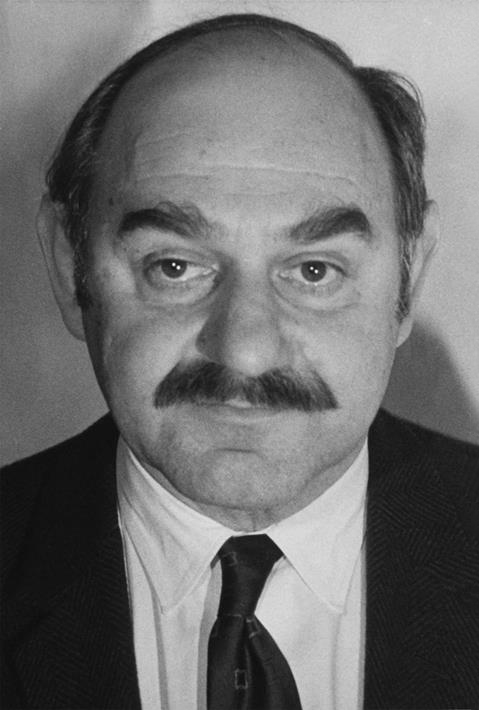
In 1961, at the invitation of Seymour Lieberman, Baulieu continued his work on steroids as a visiting scientist at Columbia University. Lieberman had already garnered a reputation, not only as an innovative and influential endocrinology researcher, but also as a highly regarded educator and mentor. During his time in New York, Baulieu met Gregory Pincus, the inventor of the birth control pill. Pincus helped Baulieu obtain a sizable grant from the Ford Foundation to conduct research on steroidal hormones, although Baulieu was not particularly interested in refining the birth control pill.1,2,4
In 1963, Baulieu received a PhD in biochemistry from the Faculté des Sciences in Paris.1–3 That same year, he was named director of Unit 33 of Inserm (France’s National Institute of Health). In 1966, President Charles de Gaulle’s government appointed him to a committee that was instrumental in getting birth control legalized in France.3,4
Although the French pharmaceutical company, Roussel-Uclaf, was the most important steroid company in the world, Roussel-Uclaf’s executives decided not to pursue production of the birth control pill, because they did not want to risk offending the Catholic Church.4
Early Steroid Research
In 1970, Baulieu became a biochemistry professor in the Faculty of Medicine at the University of Paris-Sud, in addition to his job at Inserm.2,3 He had “a breezy, almost brash manner and hyperkinetic nature.”4 It gave him “the air more of a populist politician than of a meticulous medical researcher.”4 He was, in fact, both.
Baulieu guided his research team in isolating intracellular steroid receptors in the uterus.2–4 Those steroid receptors were activated by progesterone, which signals the uterus to implant a fertilized egg.
Their goal was to find analogs that inhibited progesterone. Such a drug would prevent impregnation and thus prevent or terminate pregnancy. To Baulieu, this pharmacologic intervention would simply reverse the natural process of implantation, and he thought that was better than a surgical abortion.3
Roussel-Uclaf’s scientists were screening steroid analogs to find antagonists of glucocorticoid receptors.5 In 1980, George Teutsch succeeded in making RU-486 the 486th compound synthesized at Roussel-Uclaf.4,6 In screening the compound, they found that it had a high affinity for both glucocorticoid and progesterone receptors. Because of RU-486’s impressive progesterone antagonist activity, Baulieu, who was an independent consultant to the company, encouraged Roussel-Uclaf to focus on that.3–5
Making that choice diverted research away from RU-486’s potential uses as a glucocorticoid antagonist. Possible indications included glaucoma, certain types of breast cancer, and Cushing’s syndrome—a condition that results from overproduction of cortisol.4–8
Clinical Trials
Anti-fertility clinical trials of RU-486 began in Switzerland in 1982 under Walter Hermann, a long-time friend of Baulieu.3,4,6 The following year, the French clinical trials began in Paris. Of the first 100 pregnant women who took the drug, 85 experienced complete abortions. By blocking the effects of progesterone, RU-486 caused the endometrial lining to break down, and the cervix softened and dilated. Those effects facilitated expulsion of uterine contents. The drug was also well tolerated. Only 18% of the women experienced prolonged, heavy bleeding.9
Baulieu presented the Swiss clinical trial results to the French Academy of Sciences in 1982, saying that orally administered RU-486 was safe and effective.2 The French clinical trial results were published in the New England Journal of Medicine in 1986.9 In that article, Roussel-Uclaf adopted “mifepristone” as the generic name for RU-486.
Roussel-Uclaf adopted mifepristone as the generic name for RU-486.
Even at this early stage, researchers suggested that addition of a prostaglandin might improve the efficacy of mifepristone.9 Prostaglandins induce uterine contractions, and as a single agent, they had been shown to achieve an almost 85% abortion success rate.6,9 But the subjects also experienced painful uterine contractions and gastrointestinal side effects. Consequently, the investigators thought that following mifepristone with a relatively small dose of a prostaglandin might improve the abortion success rate without noticeably increasing side effects. Indeed, subsequent trials showed that mifepristone, followed by a prostaglandin, raised the effectiveness rate from 80% to 96%.4
Roussel-Uclaf continued to sponsor contraceptive and abortion clinical trials, but almost exclusively in Europe, because of the generally hostile climate toward contraceptive innovation in the US. In December 1984, Baulieu and his Swedish colleague, Marc Bygdeman at the Karolinska Institute in Stockholm, reported that their method of combining mifepristone with a follow-up prostaglandin dose resulted in a “100% success” rate for inducing abortions, and there were no significant side effects.4
In February 1988, the World Health Organization announced results of clinical trials in Britain, China, France, and Sweden, which showed that mifepristone in conjunction with a prostaglandin was 95% effective and free of significant side effects. The discovery was hailed as a breakthrough, especially for developing countries where physicians and sanitary conditions were in short supply, and risky back-alley abortions were common.4
The discovery was hailed as a breakthrough, especially for developing countries where physicians and sanitary conditions were in short supply, and risky back-alley abortions were common.
Senior Management Support
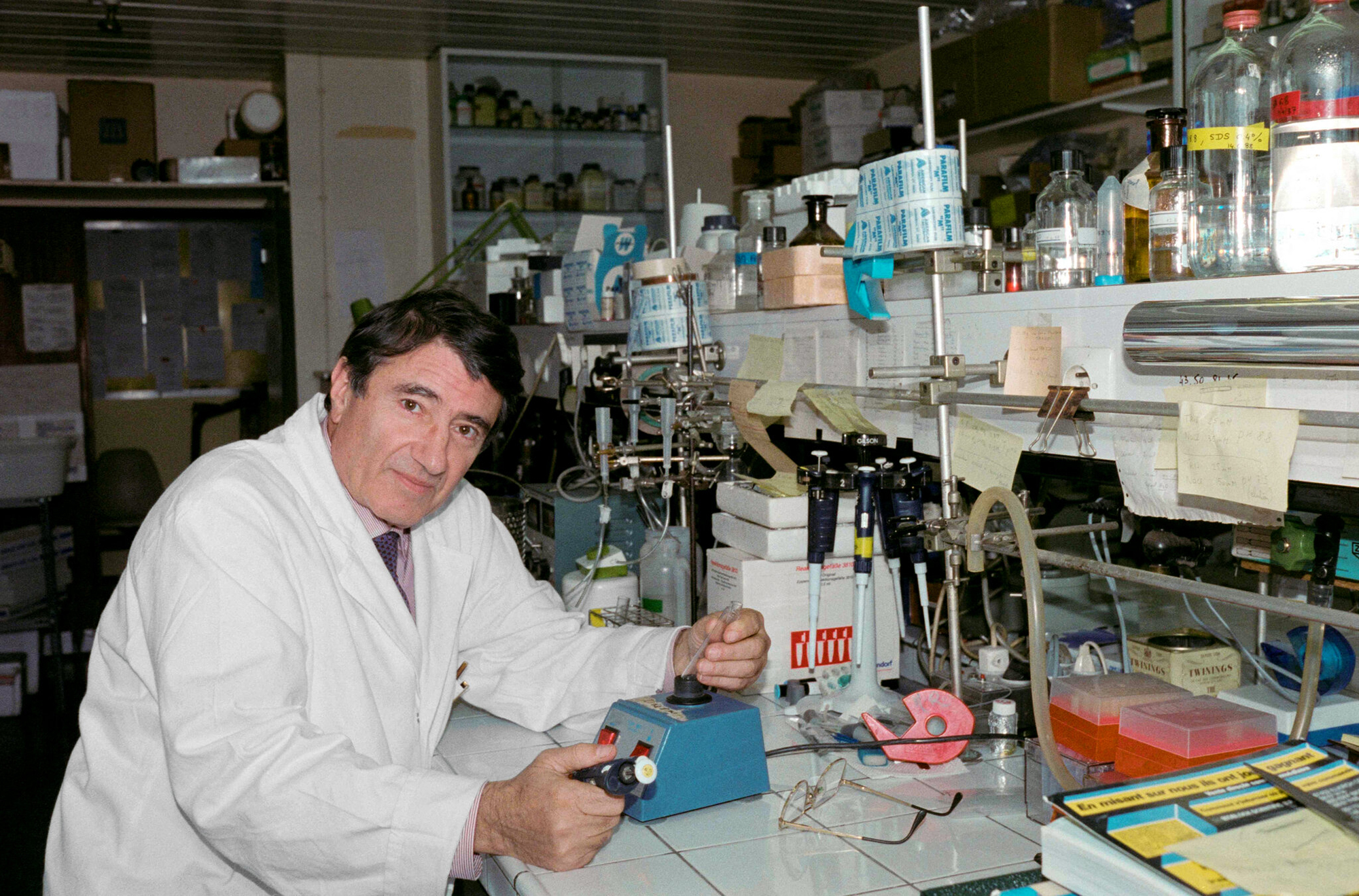
Edouard Sakiz, Roussel-Uclaf’s Chief Executive Officer, quickly became an enthusiastic supporter of mifepristone.4 A native of Turkey, Sakiz received his MD at the University of Paris in 1957 and a PhD in 1964. In 1962, he held an assistant professor position at Baylor Medical School in Houston. In 1966, after Sakiz’s return to Paris, Baulieu recommended him to Roussel-Uclaf for the position of Director of Biological Research. Sakiz then steadily rose through the management ranks at Roussel-Uclaf, becoming Director of Research in 1969, Executive Committee general manager in 1972, Executive Board Director in 1974, Vice President in 1978, and finally the Chief Executive Officer in 1981.4

Sakiz saw a major market for mifepristone. It was an attractive alternative to the surgical procedure, which accounted for approximately 50 million abortions each year, including nearly 1.5 million abortions in the US.4
During this time, in an attempt to minimize controversy, mifepristone was positioned as a sort of long-acting “morning-after” pill or once-a-month contraceptive, although its mechanism was different from the estrogen-progestin birth control pill.4 In 1987, for example, Lynnette Nieman at the US National Institute of Child Health and Human Development, confirmed that mifepristone was an effective contraceptive and had few serious side effects.10 Baulieu also emphasized the drug was safe. “While bleeding can sometimes be excessive,” he said, “in most cases it is the same as a regular period or a spontaneous abortion.”4
Drug Opponents
However, positioning mifepristone as a once-a-month contraceptive pill did not appease anti-abortion groups. By 1985, the political controversy was being discussed in American business magazines, such as Business Week. In June 1987, anti-abortion groups met in New Orleans to formulate political strategies for resisting mifepristone’s use. Among other things, they lobbied Congress to stop the Food and Drug Administration (FDA) from authorizing clinical trials of the drug.4
In parallel, demonstrators were taking a toll on Sakiz in France, and his support for mifepristone at Roussel-Uclaf began to wane. They shouted taunts outside his window, and he received up to 25 threatening letters a day. At Roussel-Uclaf’s annual meeting on June 23, 1988, an abortion opponent, Xavier Dor, dominated and berated Sakiz for 20 minutes. Other Roussel-Uclaf officials were also inundated with letters of protests and threats of boycotts. Anonymous letters even threatened their wives and children.4
Outspoken by nature, Baulieu vigorously advocated acceptance of mifepristone, despite also receiving voluminous hate mail.3 Some anti-abortion activists compared him to Hitler, and he once traveled with a bodyguard during a visit to the US.1,3,4 Baulieu was well-suited to this public role, because he was “opinionated, at times brash, and always comfortable in the spotlight.”1 He had no financial stake in mifepristone’s success and insisted he was merely “a medical doctor who does science. I want to help women.”3 Botched abortions killed 200,000 women every year, he said, and “mifepristone can save them.”1
Despite the growing public pressure, CEO Sakiz was unwilling to repeat the mistake of the 1960s, when Roussel-Uclaf chose not to produce oral contraceptives for fear of a public and religious backlash. He hoped that the protests would disappear after France’s Minister of Health, Claude Évin, ruled on Roussel-Uclaf’s application to market the drug.4
Waffling on Marketing
On September 23, 1988, French Minister of Health Évin approved mifepristone for use up to 7 weeks of pregnancy.4–6,11 But instead of the protests dying down, as Sakiz hoped, they escalated. The Archbishop of Paris, Cardinal Jean-Marie Lustiger, condemned the pill.4 Anti-abortion extremists again threatened boycotts and violence. At one point, they set fire to a Paris movie theater.3,5,6
CEO Sakiz was unwilling to repeat the mistake of the 1960s, when Roussel-Uclaf chose not to produce oral contraceptives for fear of a public and religious backlash.

Roussel-Uclaf’s German parent company, Hoechst AG, was also concerned. Hoechst AG depended heavily on US sales and was receiving threats of boycotts on all of its products. The Hoechst AG CEO said mifepristone was simply not worth the risk and strongly urged Roussel-Uclaf to suspend mifepristone sales. That, along with the public demonstrations, persuaded Sakiz to withdraw support for the drug.4
At a management committee meeting on October 21, 1988, Sakiz called for a vote. It was a tough decision. The committee anticipated that a boycott would have at least a short-term economic impact, but they were more concerned about the impact of their decision on the company’s international image.4 Ultimately, they voted to withdraw mifepristone from the market in France and pause contracts that had already been executed for mifepristone distribution in China, Spain, Britain, and the Scandinavian countries.4,5
On October 26, 1988, Roussel-Uclaf publicly announced its decision to pull mifepristone off the market.4 The decision was based solely on reaction to the clamoring public, not because there were any safety problems.6 Sakiz explained, “We have a responsibility in managing a company, but if I were a lone scientist, I would have acted differently.”4 Baulieu did not hear about the Roussel-Uclaf committee’s vote until the following week. When he did, he went straight to Paris to protest directly to Sakiz. Sakiz urged Baulieu (who was still an independent consultant) to go public.4
On the day of Roussel-Uclaf’s public announcement, 10,000 physicians and researchers had gathered in Rio de Janeiro for the World Congress of Gynecology and Obstetrics.4 The meeting turned into a rally in support of mifepristone. Baulieu, who was attending the Congress, called for women to organize: “It’s not enough for women to show a simple desire for the pill. There must be a public mobilization to demand it be made available.”3,4
In addition to Baulieu’s advocacy, international organizations also mobilized.6 Worldwide obstetrics and gynecology organizations, American and European university professors, and Planned Parenthood (among other advocacy groups) initiated protests and threatened boycotts of their own, demanding access to mifepristone.4,6
Within the French government, efforts were also underway to force Roussel-Uclaf executives to reverse their decision. Minister of Health Évin summoned Roussel-Uclaf Vice Chair Pierre Joly to his office and expressed his anger that the company had pulled mifepristone off the market only four weeks after the French government had defied the Catholic Church and anti-abortion groups to approve the drug. Évin feared that if those groups triumphed against Roussel-Uclaf, they would next begin a campaign to repeal France’s 1975 law legalizing abortion.4

The French government owned 36% of Roussel-Uclaf. Évin told Joly that he would apply special provisions in French law to transfer the mifepristone patent to another company, if Roussel-Uclaf didn’t resume marketing the drug.3–6,11
On October 28, 1988, just two days after the public announcement to withdraw the drug, Roussel-Uclaf put mifepristone back on the market.3,4,6 Baulieu agreed with the government’s actions. Sakiz was also delighted, because the government order shifted responsibility from Roussel-Uclaf to the French Ministry of Health.4
Health Minister Évin later explained, “I could not permit the abortion debate to deprive women of a product that represents medical progress. From the moment Government approval for the drug was granted, mifepristone became the moral property of women, not just the property of the drug company.”4
“From the moment Government approval for the drug was granted, mifepristone became the moral property of women, not just the property of the drug company.”
Other countries soon approved mifepristone. China was an early adopter, although Roussel-Uclaf did not market mifepristone there right away. In 1991, British authorities granted full approval, followed by Sweden in 1992.6,11
In September 1989, Baulieu received the Albert Lasker Clinical Medical Research Award for his contributions to the broad field of steroid hormone research and especially for developing mifepristone.2–4 Scientists and family planning organizations praised the choice, but anti-abortionists were outraged and accused Baulieu of waging chemical warfare against the unborn.4
American Resistance
Progesterone antagonists such as mifepristone represented the first breakthrough in fertility control in 20 years.12 But because of the controversy surrounding abortions, Roussel-Uclaf announced it would only license mifepristone to companies in countries whose governments specifically requested the drug.4,5
Progesterone antagonists such as mifepristone represented the first breakthrough in fertility control in 20 years.
Roussel-Uclaf even hesitated to supply mifepristone for research on non-abortion indications.4 The drug has been useful in treating endometriosis and reducing the need for caesarean sections by facilitating difficult deliveries. As a glucocorticoid antagonist, mifepristone was also a possible treatment for Cushing’s syndrome, breast cancer, meningioma, and even obesity.
Mifepristone has been useful in treating endometriosis and reducing the need for caesarean sections by facilitating difficult deliveries.
The French approval in 1988 intensified American anti-abortion groups’ activities. In addition to Hoechst AG and Roussel-Uclaf, they threatened to boycott any US drug company that pursued development of mifepristone. Publicly, the drug companies said they were not concerned with boycott threats, but privately one pharmaceutical executive admitted, “The reasons are obvious…we don’t want to get into it.”4
Still, the promise of mifepristone generated enthusiasm among women’s health advocacy groups such as Planned Parenthood and the Population Council, which supported the drug. A Harris Poll released on October 12, 1988, found 83% of Americans supported government spending on R&D for new contraceptives and 59% thought mifepristone should be made available in the US.4 Advice columnists Ann Landers and Abigail Van Buren also publicly supported the drug.
Investigators led by Daniel Mishell, Jr., at the University of Southern California, under a grant from the Population Council, were conducting one of the few mifepristone research projects in the US.13 In December 1988, they announced that a single dose of mifepristone alone could provide an effective abortion for 81–100% of women when taken within 49 days after their last menstrual period.14
In June 1989, under pressure from conservative lawmakers, FDA Commissioner Frank Young tightened the government’s drug import policy and blocked importation of unapproved abortifacient drugs including mifepristone.4,6,15 In 1990, the USC investigators used the last of their mifepristone supplies to treat 16 women.4 Unfortunately, the ban also hampered researchers who were using the drug to study breast cancer and treat Cushing’s syndrome, and their work was similarly halted.
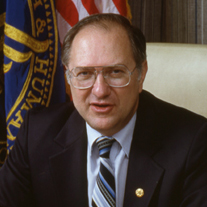
In response to Commissioner Young’s action, feminist leaders began another campaign to bring mifepristone to the US. The American medical community also urged Roussel-Uclaf and the FDA to make mifepristone available. At the American Medical Association’s annual meeting in June 1990, the AMA’s policymakers unanimously supported testing and possible use of mifepristone.
American Trials
On January 22, 1993, (the 20th anniversary of Roe v Wade), one of incoming President Clinton’s first acts was to direct the FDA to investigate uses of mifepristone.15 After negotiations, Roussel-Uclaf agreed to transfer all of its mifepristone patent rights to the Population Council, the New York City-based nonprofit reproductive health and population control research institute.5,6,16 In return, Roussel-Uclaf was relieved of all product liability for the drug in the US.16 The agreement was finalized on May 16, 1994.6,7
Later in 1994, the Population Council began a 2000-patient clinical trial.5–7,16,17 At the same time, several small companies approached the Population Council about possible manufacture of the drug.16 The threatened boycotts were a minor financial factor in their marketing analysis. Mifepristone undoubtedly would be a moneymaker.4
In 1996, the Population Council submitted its New Drug Application to the FDA, requesting market approval of mifepristone.6,11,17 The application included the results of their sponsored US clinical trial, along with data from the European clinical trials, sponsored by Roussel-Uclaf.7 The Roussel-Uclaf trials, conducted mostly in France, included one that enrolled 16,000 participants. The safety and efficacy findings of the US trial were similar to Roussel-Uclaf’s two pivotal trials.11
In July 1996, FDA’s Reproductive Health Drugs Advisory Committee met, concluded that mifepristone was safe and effective, and recommended approval.6,11,15 But they wanted to see data from another US study, which was currently ongoing. The committee also recommended safety restrictions, because so much of the data had been collected under the French health system, which was different from the US.11 For example, the French clinical trials used sulprostone or gemeprost as the prostaglandin component, whereas the US clinical trials used a different prostaglandin, misoprostol.4
The Advisory Committee noted that serious, heavy, or prolonged bleeding sometimes occurred, but similar bleeding also accompanied surgical abortions and miscarriages. There was also a possibility of a serious bacterial infection and sepsis. Complaints of abdominal pain or discomfort were primarily attributed to misoprostol.18
The FDA scientists who reviewed the application found one major hang-up. The Population Council’s application was missing details of who, where, and how the drug would be manufactured. As a nonprofit research organization, the Population Council had no such facilities, and they could not find a willing manufacturing company. Conservative investment organizations had vigorously pressured large drug manufacturers, including Teva, Merck, Abbott Laboratories, Johnson & Johnson, and Pharmacia & Upjohn, all of which declined to either produce or distribute mifepristone.6
Despite the Advisory Committee’s positive recommendations, the FDA and the Population Council went through three rounds of reviews over the next four years.11 Each time, the FDA issued an “approvable” letter, which meant that the safety and efficacy data were solid and acceptable. But the FDA required more manufacturing information and additional details in the drug’s label. The years-long regulatory limbo ended when Danco Laboratories was established solely to market mifepristone in the US.5,6
The years-long regulatory limbo ended when Danco Laboratories was established solely to market mifepristone in the US.
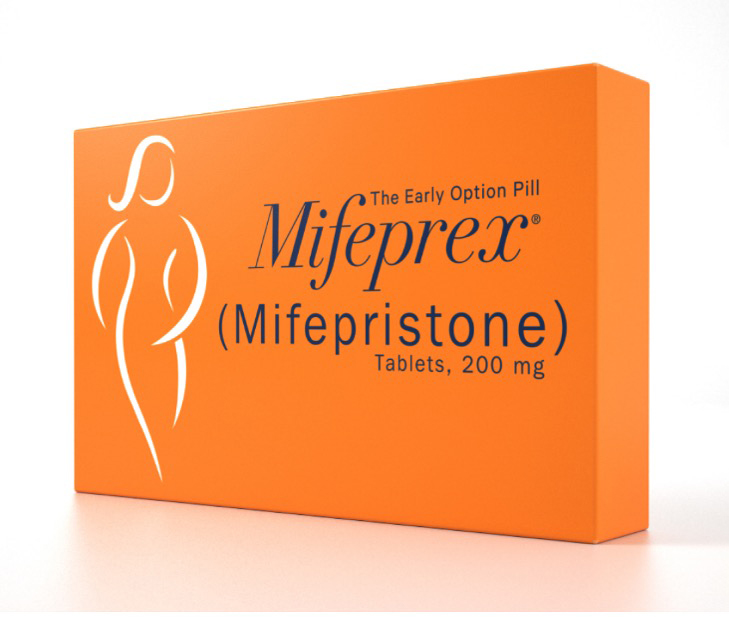
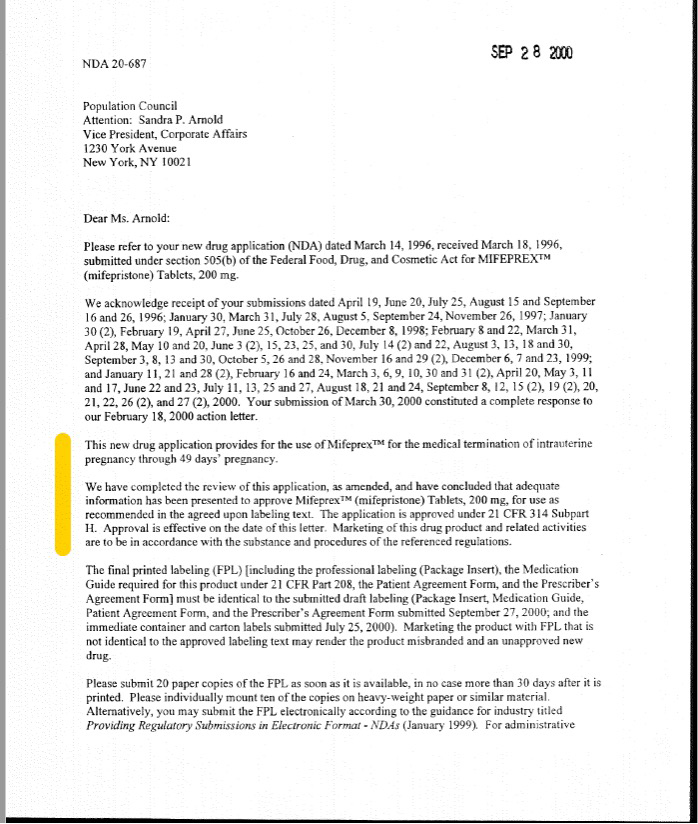
On September 28, 2000, FDA formally approved mifepristone under Danco’s tradename, Mifeprex. The original label permitted mifepristone “for termination of intrauterine pregnancy through 49 days’ pregnancy.”7 The treatment regimen was completed with a dose of misoprostol, which was administered two days after the mifepristone dose.
Safety Risks
Along with approval, the FDA reviewers imposed some restrictions to ensure safe use of mifepristone. Women with certain medical conditions were excluded from mifepristone treatment: those with an ectopic pregnancy, an implanted intrauterine device, chronic adrenal failure, ongoing corticosteroid therapy, concurrent anticoagulant treatment, or inherited porphyria.18
In 2007, Congress passed the FDA Amendments Act. Under this new law, FDA’s safety oversight of drugs transitioned to a new program formally known as the Risk Evaluation and Mitigation Strategy (REMS).
REMS programs are intended to mitigate the risk of serious complications from drug treatment and ensure that patients are informed of those risks.18 But REMS programs must address specific risks posed by a drug and cannot be “unduly burdensome.”19 About 70 drugs in the US are currently restricted by the terms of a REMS program.20
FDA had restricted the use of mifepristone since is approval in 2000, and those safety-based restrictions were reformatted into a REMS program, which was formally approved by FDA in 2011.8,15,18 The mifepristone REMS required drug dispensing only at healthcare facilities (such as clinics, doctors’ offices, and hospitals) by healthcare providers who had signed a Prescriber Agreement Form and been certified to provide the drug (this requirement has been called the “in-person dispensing” requirement). Also, patients were given a copy of the Medication Guide and were required to sign a Patient Agreement Form that confirmed they understood the risks of treatment. Drug distributors were also certified, could ship the drug only to healthcare workers who had signed a Prescriber Agreement Form, and were required to track storage, shipments, proof of delivery, and returns. Retail pharmacies could not distribute or dispense mifepristone.
By 2015, medicated abortions (that is, abortions using mifepristone and misoprostol) accounted for about one-third of all abortions performed in the US.6 In May 2015, Danco, the manufacturer of mifepristone, submitted additional data that supported expanding the approved gestational age from seven to ten weeks, reducing the dose of mifepristone from 600 mg to 200 mg, reducing the combo dosing interval from two days to one day, and changing the dose and route of misoprostol administration from 400 μg oral to 800 μg buccal.15 These changes doubled the number of eligible abortions.6
Danco’s requested label changes triggered a new comprehensive review of the accumulated mifepristone data. The FDA’s review encompassed all published studies, 16 years of accumulated postmarketing safety data, and the new data presented by Danco. The FDA reviewers concluded that Danco’s revised dosing regimen was appropriate and did not change the drug’s safety profile.8
In fact, the FDA scientists argued that the Patient Agreement Form was no longer needed in the REMS program, because it duplicated information in the informed consent, the counseling process, and the Medication Guide. But FDA Commissioner Robert Califf overrode their recommendation and said the Patient Agreement Form should stay in the REMS, because it provided additional assurance that the patient was aware of the procedure’s risks and appropriate follow up care.

The first generic version of mifepristone was approved by FDA in April 2019. The manufacturer, GenBioPro, was required to employ the same REMS requirements as Danco’s Mifeprex REMS, and the generic’s label instructions were also consistent with Mifeprex.18 Unfortunately, FDA’s approval of GenBioPro’s generic product triggered another public debate. Groups opposed to abortion argued that the stricter requirements of the original REMS should be fully or substantially restored. Conversely, many pro-choice and professional organizations argued that continuation of those safety precautions was unnecessary, and the REMS should be retired.8
Changes During COVID-19
The next challenge to the REMS requirements was prompted by the COVID-19 health emergency.8,15 In May 2020, the American College of Obstetricians and Gynecologists (ACOG) filed a federal lawsuit seeking to remove the REMS’s in-person dispensing requirement.8,18
On June 10, 2020, FDA staff scientists submitted an internal memo, making a similar recommendation.8 They pointed out that the public, including patients seeking a medicated abortion, had been advised to practice social distancing and avoid public places to minimize their risk of exposure to COVID-19. The intended purpose of the REMS in-person dispensing requirement was to ensure that patients received counseling at the time of dispensing mifepristone and to sign the Patient Agreement Form, but FDA scientists said those requirements could be achieved via telemedicine. Therefore, it would be appropriate to suspend the in-person dispensing requirement during the social distancing mandate.8
Contrary to the views of their own scientists, FDA’s politically appointed leaders opposed the ACOG lawsuit, saying in-person dispensing was necessary to ensure safe patient treatment.6,7 On July 13, 2020, the judge sided with ACOG and issued an injunction, prohibiting FDA from enforcing the in-person requirement.6,8 Mifepristone could be dispensed by mail. At that time, medicated abortion accounted for more than half of all abortions in the US.6,15
On January 12, 2021, the US Supreme Court reversed the judge’s ACOG decision and reinstated the in-person dispensing requirement.8,18 Concurrently, the FDA staff initiated a review to determine whether new or more serious safety issues had emerged during suspension of in-person dispensing. They cited four published studies, which reported no evidence of increased serious safety concerns with mifepristone during this period (June 2020 to January 2021).8
On April 12, 2021, in conjunction with the incoming Biden administration, the FDA stated that the government would not enforce the in-person dispensing requirement.6,8,15,18 To facilitate distribution, Danco made arrangements for mail-order pharmacies to ship the drug directly to patients, after receiving a prescription from a certified healthcare provider.18
In October 2021, the FDA staff scientists initiated another review of mifepristone to determine whether the REMS should be modified “to reduce the burden on the healthcare delivery system.”18 This comprehensive review included the published literature, other relevant safety and adverse event data, and information provided by advocacy groups, individuals, and the manufacturers, along with literature references provided by anti-abortion groups. In November 2021, they reported there were no new safety concerns and no differences in safety when mifepristone was dispensed in-person versus by telemedicine.8,18
The FDA scientists concluded that the patient’s medical history, which would flag contraindications for mifepristone, could be obtained by different types of healthcare, including telemedicine. Therefore, certified healthcare providers were not required to meet face-to-face with the patient when they prescribed mifepristone. However, those prescribers were still required to make arrangements for any necessary surgical intervention, including emergency care, if there were complications from the medication procedure.18
On December 16, 2021, FDA announced that the in-person dispensing requirement was being removed altogether from the mifepristone REMS. Any pharmacy that met the new REMS certification requirements could dispense the drug.18 To become certified, the pharmacy was required to sign a Pharmacy Agreement Form, ensure timely dispensing, and utilize shipping services that provided tracking information.18,21 Mifepristone remained available only by prescription. Major chains like CVS and Walgreens announced they would dispense mifepristone in certain legal jurisdictions, but others like Costco declined to carry it.21
On December 16, 2021, FDA announced that the in-person dispensing requirement was removed altogether from the mifepristone REMS.
After formally processing the required paperwork, FDA approved this modified REMS on January 3, 2023.18 Mifepristone prescriptions filled at pharmacies jumped from an average of 17.9 per month to over 2,730 per month, and about 98% of all mifepristone prescriptions are now filled by mail-order pharmacies.21 Mifepristone-misoprostol medicated abortions now account for about two-thirds of all abortions in the US.15,17
About 98% of all mifepristone prescriptions are now filled by mail-order pharmacies.
Assessing FDA’s Actions
In February 2026, a group at Johns Hopkins published an article in JAMA, detailing FDA’s decisions regarding mifepristone from 2011 to 2023.8 They systematically and critically reviewed 5,239 pages of FDA documents, including the REMS assessment reports, FDA scientists’ review of those reports, internal memos, and regulatory correspondence, as well as publicly available information.8
The JAMA authors found that FDA’s conclusions regarding mifepristone safety during this period were consistent, the staff scientists’ recommendations were free of ideological bias, and there was limited impact of interference by politically appointed FDA administrators. Despite facing litigation, the risks posed by the COVID-19 health emergency, and evolving practice standards, the FDA staff scientists’ conclusions, recommendations, and actions were based on scientific evidence and consistent with the agency’s regulatory mandates. In addition, the FDA scientists’ decisions did not favor one side or the other of the debate (pro-choice vs. anti-abortion) taking place outside the agency.8
The JAMA authors noted only two points where FDA political appointees overruled the perspective of the FDA scientists.8 First, in 2016, FDA Commissioner Califf retained the requirement for a Patient Agreement Form, over the apparent objections of the FDA scientific reviewers. Second, in June 2020, FDA’s official position (when facing the ACOG litigation) was to continue the in-person dispensing requirement, despite the FDA scientific team’s conclusion that in-person dispensing was not required during COVID-19.8
New Reviews
On October 1, 2025, FDA approved a second generic version of mifepristone, which is manufactured by Evita Solutions LLC.8 This triggered another public debate between anti-abortion groups that wanted greater restrictions, and various pro-choice groups that argued the REMS restrictions were unnecessary.
In addition to the FDA’s comprehensive data reviews of the original Mifeprex application, the two generics, and each label change, FDA continues to closely monitor the postmarketing safety data on mifepristone, as it does with all approved drugs.17,18 The agency is also required to periodically review and reassess whether each element of the REMS continues to be necessary. Over the past 25 years of clinical experience in millions of patients, the increasingly accumulated evidence has repeatedly confirmed that mifepristone is safe, and no new safety issues have emerged.17,18
Over the past 25 years of clinical experience in millions of patients, the increasingly accumulating evidence has repeatedly confirmed that mifepristone is safe, and no new safety issues have emerged.
Nevertheless, in 2025, Health and Human Services Secretary Robert F. Kennedy, Jr., and FDA Commissioner Martin Makary announced that FDA was undertaking yet another comprehensive evaluation of mifepristone’s safety and effectiveness.8,22 Kennedy cited “new data” presented by the Ethics and Public Policy Center, a conservative think tank, as the reason for the new review.19,23 More than 260 researchers quickly denounced the Ethics Center’s report, citing deep scientific flaws and a lack of peer review.17,19,23 The review directed by Secretary Kennedy will determine whether substantive changes to the REMS are indicated. Completion of this review is anticipated at the end of 2026.18
Litigation
More than any other drug, mifepristone has been the subject of court proceedings and legislative actions outside the normal channels of evidence-based review and scientific assessment. At virtually every stage of mifepristone’s development and subsequent marketing, various groups have filed lawsuits or proposed legislation, which sought to either suppress or increase availability of mifepristone. Those cases are too numerous to discuss in detail.
The most notable recent example was FDA v Alliance for Hippocratic Medicine. The lawsuit from a Christian advocacy organization, representing a group of anti-abortion doctors, sought to withdraw FDA’s approval of mifepristone.6,15 The doctors cited two published studies that claimed mifepristone harmed women. But the publisher retracted those articles because the studies’ authors concealed conflicts of interest, there were fundamental study errors, and the studies’ conclusions were unreliable.15
The federal district court judge in Texas, Matthew Kacsmaryk, agreed with the doctors and revoked approval of mifepristone, a decision that blocked nationwide access to the drug.15 It was the first time a federal court had ordered the government to revoke approval of a drug—over the objections of the FDA and the drug’s manufacturer.6 The judge’s decision was immediately appealed.
On June 13, 2024, the US Supreme Court dismissed the case on a technicality, because the doctors did not have standing.11 Mifepristone remains available, but the Court’s ruling does not prevent other groups from filing a similar suit.
Baulieu Tributes
Étienne-Émile Baulieu remained a fierce advocate for acceptance of mifepristone. He wanted “to give women a choice that, through a pill, respects their privacy and physical integrity and allows them to totally avoid the aggression of surgery.”6 In referring to the Supreme Court’s decision to overturn Roe v Wade, he said, “It is always tragic when politics takes the most vulnerable hostage, in this case, women.”1
In his later years, Baulieu’s research focused on steroid hormones, their antagonists, and their uses in reproduction, cancer, and the nervous system.2,3 He was especially interested in how the steroidal hormone DHEA, which he had studied early in his career, affects the aging process.1–3 Baulieu was also a passionate teacher who inspired first-year medical students, medical interns, pharmacists, and biology students from all walks of life, especially women.2
Internationally, Baulieu was cofounder of the International Society for Research in Biology and Reproduction (1967), a member of the US National Academy of Sciences (1990), the New York Academy of Sciences (1985), and Academia Europaea (1989), and an assistant professor at Scripps Institute (2006). And of course, in 2023, he received France’s highest award, the Grand Cross of the Legion of Honour.2

Baulieu said, “I have never been ‘for abortion,’ but rather ‘for the right to abortion.’ I support life and women’s right to choose.”3
Author
-

 View all posts
Rebecca J. Anderson holds a bachelor’s in chemistry from Coe College and earned her doctorate in pharmacology from Georgetown University. She has 25 years of experience in pharmaceutical research and development and now works as a technical writer. Her most recent book is Nevirapine and the Quest to End Pediatric AIDS.
