Vikram Aditya
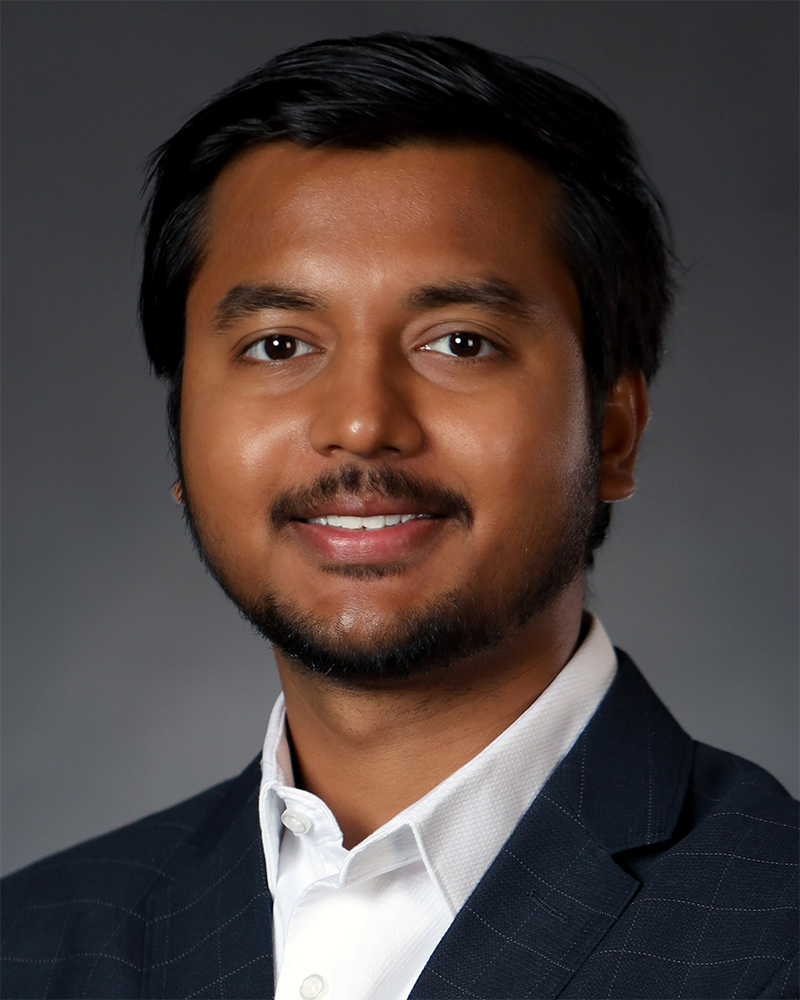
Vikram Aditya, a 4th-year PhD Candidate at the University of Oklahoma Health Campus, developed an interest in biomedical science at an early age when he spent time at his father’s small clinic and diagnostic laboratory in Daltonganj, Jharkhand, India. “Seeing patient care up close, from consultation and laboratory testing to treatment decisions and medication prescriptions, made me curious about how science guides healthcare,” he shares. During his PhD training in Dr. Wei Yue’s laboratory on drug transporters in the field of pharmaceutical sciences, Aditya developed an interest in transporter regulation, particularly how transporter regulation influences drug disposition and drug-drug interactions.
The liver acts as one of the body’s main processing centers for medicines and plays an important role in clearing them from the body. Aditya’s published article, “Regulation of organic anion transporting polypeptide 1B1 transport function by lysine deacetylase 6,” focuses on OATP1B1, one of the uptake transport proteins that helps move drugs from the blood into the liver cells, and investigates whether KDAC6 can affect how it functions. The research showed that genetic loss or pharmacological inhibition
of KDAC6 reduced OATP1B1 transport function, even though the transporter was still present and located at the membrane.
“I hope my research will encourage the field to view drug transporters as dynamically regulated proteins rather than as fixed pathways whose activity is determined only by direct inhibition or genetic variation,” Aditya says. “By showing that cellular signaling and post-translational modifications can alter transporter function, this work broadens how transporter-mediated effects are understood and evaluated.”
Aditya’s long-term goal is to become a scientist in the pharmaceutical industry or regulatory agency, with a focus on transporter-mediated drug-drug interactions and physiologically based pharmacokinetic modeling. “I hope to combine mechanistic studies of drug transporter regulation with pharmacokinetic approaches to improve predictions of drug disposition, therapeutic response, and drug-drug interaction risk.” Ultimately, Aditya would like to help translate these mechanisms into better-informed drug development and safer, more individualized use of medicines.
For Aditya, being published in Molecular Pharmacology is a meaningful opportunity given that ASPET’s journals have a strong reputation for rigorous pharmacological research. The most rewarding part of Aditya’s research is seeing multiple experimental approaches converge on the same conclusion and establish a foundation for future translational research.
