
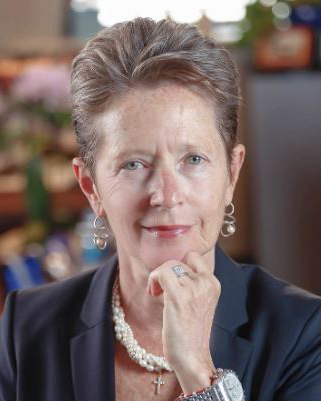
A Conversation with Daniela Salvemini, PhD, FASPET, FNAI, ASPET Councilor
How did you get started in pharmacology?
My interest in pharmacology began unexpectedly. As a young student, I thought I would pursue mathematics. That changed when I was hospitalized for appendicitis, and I became fascinated by how a simple tablet could relieve pain. I did not even know the word analgesic, but I wanted to understand how drugs worked.
I studied pharmacology at Chelsea College, where Dr. Jack Botting played an instrumental role in nurturing my passion for science. I asked endless questions, and his answers always made me think more deeply and ask even more. He was an exceptional teacher who challenged me intellectually, and we remained good friends until his passing.
During my undergraduate studies, I spent a year at Sandoz working with Drs. John Morley and Clive Page on drugs to prevent asthma. It was a fantastic experience that sparked my passion for inflammation research and showed me how exciting research in the pharmaceutical industry could be. I knew then that I wanted to pursue translational research.
Another defining influence was the late Nobel Laureate Sir John Vane, with whom I completed my PhD and postdoctoral training in London. Sir John shaped how I approach science and remained a mentor throughout my career.
I later spent two years at Monsanto in St. Louis working with Dr. Philip Needleman, further broadening my experience in drug discovery. Together, these experiences shaped my career at the intersection of fundamental pharmacology and the search for better treatments.
How did you first get involved with ASPET?
I joined ASPET around 1994 as a postdoctoral fellow, excited to become part of a community that shared my enthusiasm for pharmacology.
Over the years, ASPET has given me opportunities to exchange ideas, build friendships, and connect with scientists across academia and industry. I have encouraged my students and postdoctoral fellows to participate, organized scientific symposia, and served as an ASPET Councilor. Receiving the Pharmacia–ASPET Award in Experimental Therapeutics and becoming an ASPET Fellow were meaningful honors, but what I value most is belonging to a scientific community that has accompanied me throughout my career.
What do you want the ASPET membership to know about you and your ideas on how to move the organization forward during your term?
I believe good leadership starts with listening. People bring different experiences and ideas, and an organization is strongest when members feel they have a voice and can make a meaningful contribution. That is the kind of ASPET I want to help build.
One priority is to give students, postdoctoral fellows, and early-career investigators a greater role in shaping the Society’s future. I want them not only to attend scientific sessions but also to help organize them, share ideas, and participate in leadership. I also want to strengthen connections among academia, industry, and government. Having worked in both academic and pharmaceutical research, I know how much we can learn from one another and how important those relationships are in moving discoveries toward better treatments.
What has been your proudest accomplishment in your career so far?
I am proud of the discoveries from my laboratory that have opened new directions in pain research. Our work helped establish the importance of nitroxidative signaling in chronic pain and uncovered the therapeutic potential of the adenosine A3 receptor as a promising target for non-opioid pain treatments. More recently, we have contributed to the emerging concept of peripheral neuropathies as sphingolipid disorders, or sphingopathies.
Equally meaningful are the people behind these discoveries. Watching students and postdoctoral fellows grow into independent scientists has been one of my greatest rewards. To me, mentorship means recognizing potential, opening doors, and sometimes putting another person’s success ahead of your own.
What makes me proudest is the science we have accomplished together, the careers we have helped nurture, and the possibility that our discoveries will ultimately benefit patients.
What advice would you give young scientists who are just starting out in their careers?
Stay curious and never lose the joy of discovery. Science is wonderful, but it is also hard. Be persistent, learn from setbacks, and remain open to unexpected directions.
Surround yourself with people who know things you do not, challenge your thinking, and help you grow. Never feel threatened by their expertise; learn from it. Teams bring together different personalities and ways of thinking. Be flexible, respect those differences, and learn to work together.
Do not be afraid to sit at the table. Speak up and share your ideas. Do not let the fear of being scooped silence you. If someone gets there first, you will have another idea.
Seek good mentors. We need different mentors at different stages of our careers as our challenges and aspirations evolve. Sometimes, if we are fortunate, one person remains a pillar of guidance and inspiration throughout our journey. Be generous with others, and always be collegial and kind. Science brings extraordinary people and friendships into our lives.
Finally, remember that life exists outside the laboratory. Nurture your relationships, and never neglect your family. They are your greatest supporters and cheerleaders. Enjoy the science, the people you meet, and your life along the way.
